
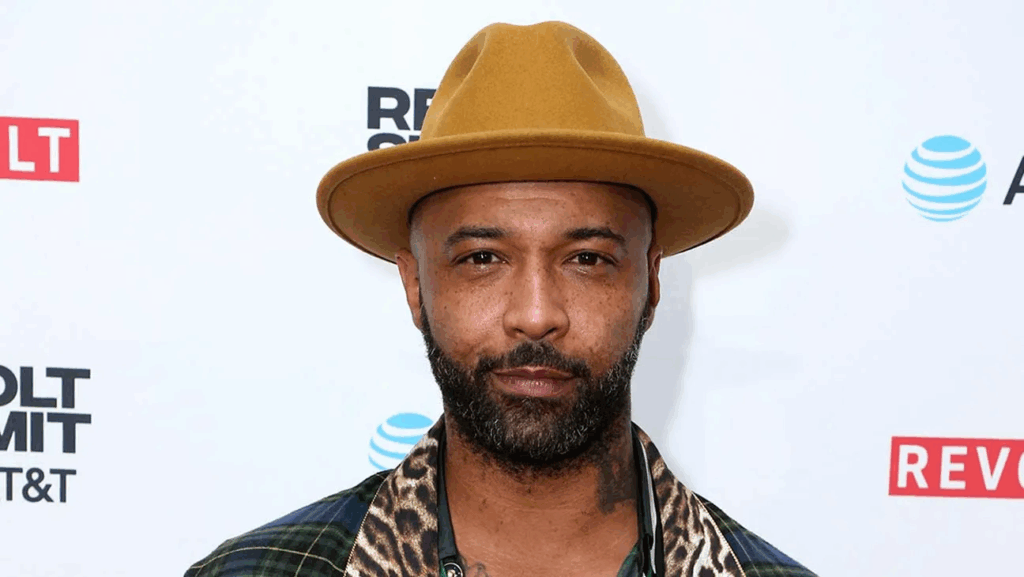
The summer of 2003 was a cultural flashpoint in New Jersey, simultaneously witnessing the pinnacle of the state’s most beloved basketball franchise and the mainstream arrival of a hip-hop titan. On one stage, the New Jersey Nets, fueled by the dynamic athleticism of forward Kenyon Martin, made their second consecutive trip to the NBA Finals. On another, rapper Joe Budden, a native of Jersey City, launched a stellar career with his self-titled debut album. As both men cemented their status as local legends and national stars, their paths often converged—though sometimes, they became one in the eyes of the public.
In a retrospective interview on Scoop B Radio, Kenyon Martin recounted a peculiar side effect of their parallel success: the frequent, mistaken identification of the six-foot-nine NBA star for the rapper. Martin confirmed that the confusion was not an isolated incident but a pervasive reality of his life off the court. When asked if he was often mistaken for the lyrical MC, the former Nets forward’s response was immediate and emphatic: “Everywhere,” Martin recalled, laughing. “Everywhere! You name it!”
The timing was perfect for such a mix-up. As Martin noted in the interview, “Summer 2003 was big for both Kenyon Martin and Joe Budden.” For Budden, June 10, 2003, marked the release of his debut album via Def Jam, featuring the ubiquitous, Just Blaze-produced crossover anthem “Pump It Up.” The track became a cultural staple, landing on the soundtracks for blockbuster movies and major video games. Budden was the sound of the summer, his lyrical skill resonating deeply within the state.
Just days earlier, Martin was busy carving out his own legacy. As a relentless presence on the court, K-Mart was integral to the Nets’ 49-33 season and their dominant sweep of both the Boston Celtics and Detroit Pistons to reach the NBA Finals. While the team ultimately lost the series 4-2 to the Tim Duncan-led San Antonio Spurs, Martin was a warrior throughout, providing gritty defense and explosive scoring. He led the Nets in scoring in the pivotal Game 4, putting up 20 points and grabbing 13 rebounds in New Jersey’s narrow 77-76 victory. Martin’s tenacity made him a household name—and a visible figure—throughout the Garden State.
Despite their differing professions and the noticeable height disparity, both men shared a distinct, powerful aesthetic common to the New Jersey scene, which often led to the confusion. Martin explained that the identity mix-ups primarily occurred in community settings rather than the upscale venues often frequented by athletes. He recalled that the mistaken identity would mostly happen while he’d go shopping in downtown Newark. “I used to go onto Clinton Ave a lot and in the hood on Clinton Avenue shopping,” he said.
The dynamic was always the same: a fan would spot a celebrity from afar, see a similar look or style, and assume they were looking at the rapper who dominated the summer airwaves. It was only upon approach that the fan would realize the error, often due to the imposing stature of the Nets’ star power forward. The transition from confusion to recognition would occur the moment they closed the gap. Martin explained the resolution, emphasizing the clear difference in size: “It would be at a distance and then they would get up on me and see the height differential and say: ‘Oh hey! It’s K-Mart.’”
The story is a warm testament to the cultural moment, illustrating how both a rising rapper and an NBA star could become intertwined symbols of New Jersey pride. Martin wasn’t just another NBA player passing through; he was a celebrity whose face—and occasionally, his likeness to another local icon—was recognized in the most integral parts of the community. In a summer where “Pump It Up” blared from cars and Kenyon Martin was battling Tim Duncan on national television, the mix-up solidified the shared, intense level of celebrity both men achieved in the heart of the Garden State.