
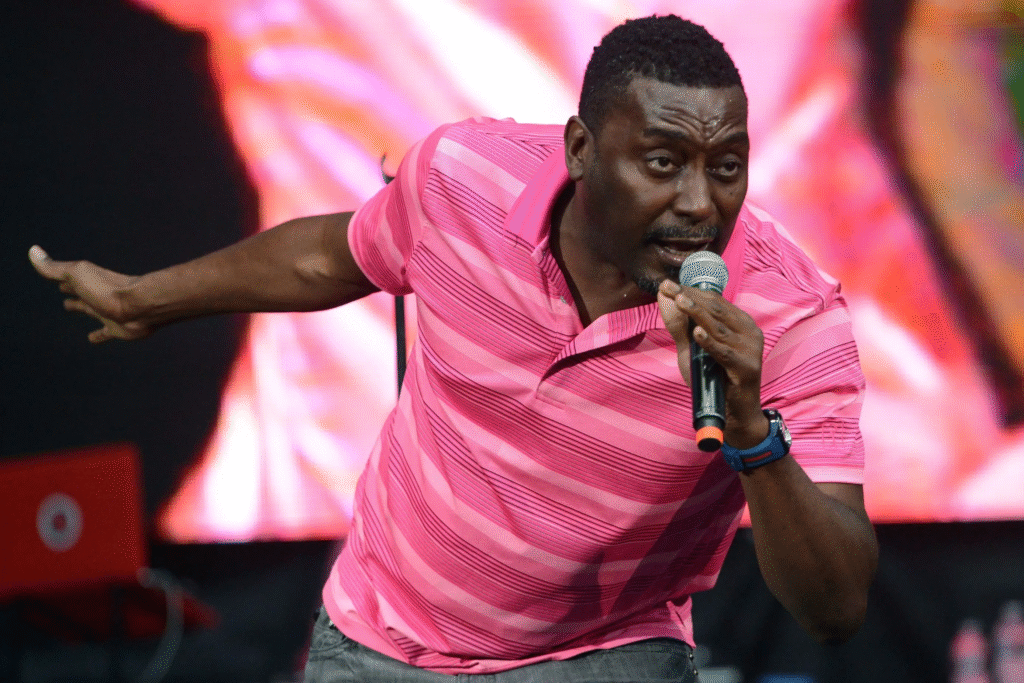
It is a profound honor to host the legendary Big Daddy Kane on Scoop B Radio for a deep and insightful conversation about his monumental career and the culture he helped define.
Our discussion begins at the genesis of his artistry, exploring how his foundational time with the iconic Juice Crew and producer Marley Marl—two colossal forces in early hip-hop—catalyzed his transition from a gifted battle rapper into a captivating stage performer and lyrical innovator. Kane shared vivid memories of his early days, including the invigorating competition and mutual sharpening of skills with peer lyricists like Kool G Rap, which ensured his pen remained razor-sharp. He also recalled the privilege of joining a crew anchored by the era’s “super producer” and “voice of hip hop,” underscoring the high-stakes environment that shaped his groundbreaking sound.
This interview provides a rare look at the formative moments that cemented his status as a true giant of the genre.
Q&A With Big Daddy Kane
This transcript has been edited and condensed for clarity and space. You can watch the full, unedited interview by clicking here.
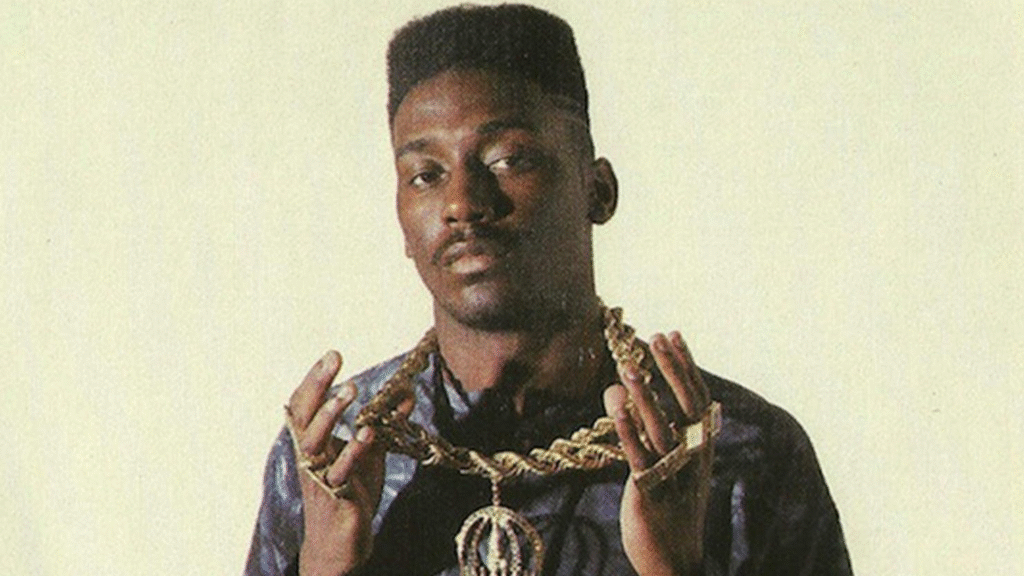
Brandon “Scoop B” Robinson: How did your time with the Juice Crew and Marley Marl shape you as an artist?
Big Daddy Kane: Basically learning how to record and things of that nature. In the beginning, I just started out as a battle rapper and then all of a sudden, when I meet Biz, next thing you know I’m actually on a real stage in front of an audience with the microphone, performing, not battling but trying to entertain the audience. So that was a change in experience for me. And then getting down with the Juice Crew, I would say some of the greatest moments was sharing a label with Kool G Rap, another amazing lyricist, who I feel that we kept each other on our toes and we kept our pen sharp because of the lyricism. It’s like at that point in time, Marley Marl was the super producer in hip hop. Mr. Magic was the voice of hip hop and I’m entering into a crew where they both live.
Brandon “Scoop B” Robinson: You’re often cited as a major influence on some of the biggest names in hip-hop like Jay-Z. What’s it like to see your style, as well as your lyrical approach reflected in the work of so many people?
Big Daddy Kane: I think that it’s a blessing because that’s like going from one generation to the next generation to the next generation. So I guess the best way to put it is in the words of one of our great Negro poets from the 80s, known to the world as Big Daddy Kane. I may die one day, but my rhymes will remain like a hieroglyphic.
Brandon “Scoop B” Robinson: I like the way you quoted yourself.
Big Daddy Kane: Ha ha ha ha.
Brandon “Scoop B” Robinson: That kind of gave me a 2000s WWE flashback with The Rock: “The Rock says this…”
Big Daddy Kane: Hahaha.
Brandon “Scoop B” Robinson: Speaking of which, how much do you see a direct crossover between wrestling promos and rap lyrics? Which wrestlers and rappers most clearly embody this shared style?
Big Daddy Kane: If I had to envision a rap artist as a wrestler, I would say DMX. Jim Jones. Man that’s a good question, but I mean, those would be, I guess the first two that would come to mind.
Brandon “Scoop B” Robinson: On a recent episode of Scoop B Radio, Jim Jones emphasized that his connection to wrestling was based on ‘seeing the persona’ of wrestlers like Hogan and Jimmy Superfly Snuka. In the context of modern hip-hop, which current rapper embodies the most successful and fully-realized wrestling-style ‘gimmick’ or persona, and why?
Big Daddy Kane: I could believe that. I personally never really got into wrestling like that. And I think the only wrestler I’ve really met was the Haiti Kid. But I remember reading that was the influence for Muhammad Ali’s antics. I forgot, what was his name? Pretty something or some wrestler from the 60s that I guess Ali used to watch. So I mean, I can understand the impact.
Brandon “Scoop B” Robinson: Both Long Live the Kane and It’s a Big Daddy Thing are certified classics. Could you walk us through the creative process for these landmark albums?
Big Daddy Kane: Well, with Long Live the Kane, it was an introduction. So there were so many things that I saw Biz do when he was recording. And I tried to adapt that formula, and try to follow the things that I had witnessed him do. And, as far as finding the right production, or the crate digging finding the right beats and things of that nature. And Marley, his house had such a warm, raw gutter sound that production-wise, he could bring it to life. And I would say that on Long Live the Kane, I talked about what I knew. I’m a kid from Brooklyn. I hadn’t seen much. I don’t know much about the world, so I talked about what I knew in Brooklyn. By the time we got to It’s a Big Daddy thing, I had toured the world. I had discovered that there were Black, White, Latin, Asian fans. So many different cultures were into hip hop. Women love hip hop as much as men do. So I learned a whole lot more. So I think that on that sophomore album, my views were a lot broader.
Brandon “Scoop B” Robinson: You were known during your career specifically for your fashion and suave persona. How important was that element to your identity as an artist, and do you feel like it’s still a significant part of hip hop culture today?
Big Daddy Kane: I feel like to some, because we live in a world now where whatever is trending, the majority follows. So if someone famous says, keep it real or keep it gutter, then I don’t think that fashion is going to apply to their fan base. But I know that back then early on, I believe it was Rick James that said to me, you know, I don’t ever wanna look out in the crowd and see a mother effer dress just like me. And I mean, that stuck like, yeah, you don’t, you know, if you’re there to entertain the crowd, you know what I’m saying? You wanna look larger than life. So you don’t wanna look out in the crowd and see one or two people wearing the same thing that you got on. So that was something that always stuck with me.
Brandon “Scoop B” Robinson: You’ve dropped that name, Rick James. I’ll pick it up for you. I’ll take that and raise you this: You’ve worked with Barry White, you’ve worked with Quincy Jones. How did those collaborations come about, and what did you learn from them?
Big Daddy Kane: With Barry White, we actually met at a cookout at Quincy Jones’ house, and we got to chopping it up and decided to do a song together. Quincy Jones, that was something that came through Warner Brothers. I believe that Benny Medina structured that, and when we got into the studio, we recorded a song called, Back on the Block. After we were done, Quincy asked me if I could come back the next day? And I came back the day and he started talking about my style and the rapid flow and how much it reminded him of Ella Fitzgerald. And it started explaining to me how Ella Fitzgerald was so unique with scatting because she didn’t follow the piano or the bass like most jazz singers. She followed the horn section. That’s why her style of scatting was so unique. And he was saying that mine sounded like that, my fast rapping style sounded like that. And he asked me to do this other song called Tribute to Birdland, where I’m talking about Ella, Sarah Vaughn, Dizzy Gillespie, Miles Davis, and many others. And that day, it was just Quincy’s style of production where I learned how to really dive into something and understand it, as opposed to just writing some lyrics and creating a song. He’s like, what you know about Sarah Vaughn. I’m like, not a goddamn thing, man. And he had to bring in something that I never knew existed. I’m, like, 21 years old and never knew that there were black encyclopedias until his assistant brought in about these 60 books with nothing but black history in them. You know, and we’re reading about Sarah Vaughan, reading about Ella Fitzgerald and all this. And then he’s telling me, you know we used to call each other Homeboy back in the 50s before y’all were doing it now. We were saying that back then, calling each other homeboy. And my nickname for such and such, he’s giving me all these facts, you know. So I mean, it was like, I really felt like I was truly, truly produced. It wasn’t like bringing the beat up, let me rhyme. I was really, truly produced, given instructions, direction, and things of that nature.
Brandon “Scoop B” Robinson: I’m hearing you talk and I’m thinking about The Fresh Prince of Bel Air, which is one of my favorite shows while growing up. And I remember that episode where Will’s like, l’et me call my close personal friend’ and Heavy D came out and then he, let me call my close personal friend, Malcolm Jamal Warner; God rest his soul, God rest Heavy D’s soul too. And then he called his close personal friend, Kadeem Hardison. Then I think of you. Man, you’ve lived a life!
Big Daddy Kane: I mean, life is good, man.
Brandon “Scoop B” Robinson: The 90s ushered in an era of gangsta rap and there was kind of a transition there. How did you navigate that as an artist?
Big Daddy Kane: It was a route that I wasn’t interested in taking. So I guess, I had to fall by the wayside, because there were some artists that changed over, and just started doing that. And then, there were a lot of them, where like the hip hop audience moved on and now they wanted to be gangsters. And I mean, it was cool because there’s a lot of that stuff that I really, really enjoyed. Music from, you know, DAS EFX, Snoop, Ice Cube, Ghetto Boys. It was a lot of it that I really enjoyed, but I mean, it just wasn’t my thing. That’s not what I wanted to talk about. I feel that, when you’re an artist, you signed up to make music for the people. Now, if you choose to be a role model, then that is your choice. I don’t feel like it’s an obligation because you can try to force someone to be a role model and they say something really stupid or ignorant and make us all look bad. I feel like it’s not an obligation and it should be a choice, and that’s a choice that I made. I made a choice to be a role-model. And I just didn’t see, you know, gangsta rap as being the thing that I wanted to promote to my audience.
Brandon “Scoop B” Robinson: Did it affect your artistic direction?
Big Daddy Kane: I wouldn’t say that it affected my artistic direction. I would say that it affected the fan base because as they’re moving on or moving into a different direction, I wasn’t willing to go that route. You know, so that made me lose a lot of fans and plus I had a lot of songs that were for the ladies as well. So you know made a lot of the feel like he’s on some soft stuff, he’s making songs for girls. When you come off stage and it’s the end of the night, I’d rather be girls there than men, so ain’t bother me none.
Brandon “Scoop B” Robinson: Do you feel like? Drake and LL Cool J studied your playbook?
Big Daddy Kane: Well, you know, LL came up before me. So I probably studied some of LL’s playbooks when I was a new artist. Matter of fact, I even remember performing Rock the Bells at my high school talent show. So I’ve probably followed some of the LL’s playbooks. But with Drake, I don’t know, because I mean, we’re so many generations apart. So I don’t know if Drake even knows who I am. When I met J. Cole, he told me that he had never heard of me. He grew up on Jay Z and Tupac, but when he was listening to Jay Z and he heard references about me, it made him go back and listen and find out who I was, and he was like, Oh wow, this dude was dope.
Brandon “Scoop B” Robinson: The idea that “nothing is new under the sun” is often debated in hip-hop, especially when it comes to sampling and homage. Speaking of which, Jay-Z famously sampled your track, “Come Get Some You Little Bum,” using that key line in his song “Excuse Me Again.” Was that specific line a direct quote from a personal conversation you two had, or was it purely a creative salute on his part?
Big Daddy Kane: It was just Jay paying homage, it was just Jay paying homage and he does that a lot you know with my lines with Biggie’s lines. He pays homage.
Brandon “Scoop B” Robinson: Are there any artists that are out today that you look at and you’re amazed by their level of creativity and does it take you back to a time when you were coming up?
Big Daddy Kane: Right now, I would say Lady London. I think that she’s an amazing lyricist, very, very fashionable, has a unique style, and this real dope cockiness. And, most importantly… Her ass and breasts ain’t out, but she still makes people pay her attention. So, I mean, she would probably be one of the main ones. They’re not together anymore, but I used to love watching the Migos. It’s like wherever you see these dudes, they was fly. These dudes stayed fly. Like, you listen to the stuff they are talking about, you wouldn’t expect them to be dressing the way they dress, but they cleaned up nice, man. Them dudes, they put it on. So I always love watching the Migos whenever they are on something.
Brandon “Scoop B” Robinson: Given your appreciation for lyricists like Lady London, how did you view Lauryn Hill’s emergence as a dominant solo artist with The Miseducation of Lauryn Hill?
Big Daddy Kane: It was mixed feelings. It was like, my goodness, this album is phenomenal. This album is a masterpiece. This is something like, Songs in the Key of Life, this album is so amazing. Lauryn Hill murdered this man. But at the same time, I was like, we’re getting ready to lose her. She is not gonna rap no more. She’s gonna just sing from now on. I wanna hear some bars, cause she’s on fire on the mic. I wanna hear some lyrical bars. But I’m like, yeah, I think she’s just gonna become a full fledged singer. I don’t think that she is gonna do too much hip hop much longer. Don’t get me wrong, she’s an amazing singer. So either way she go, I felt like she was gonna kill the game, but just personally, I wanted to hear her rap because she got bars.
Brandon “Scoop B” Robinson: The Verzuz battle with KRS-One is widely regarded as a major, legacy-defining moment in hip-hop history. What was the experience of sharing that stage like, and what did it mean to you to compete in front of the culture with a long-time friend?
Big Daddy Kane: It was fun, man. Me and KRS, we have so much history, that’s like my brother. And I’ve always looked at him and respected him as a great battle rapper. He understands the art of battle rap, and he’s one of the greatest lyricists ever. So for us to be able to get it on. We’re going banger for banger and we’re spitting bars. I just felt like this was an amazing hip hop moment where you got to see hip hop in its truest and rarest form. And also, we had our B-boys there as well, breaking on stage. So we tried to incorporate as many of the elements of hip hop that we could in one night.
Brandon “Scoop B” Robinson: What is one Verzuz battle that never happened that should have happened?
Big Daddy Kane: A few interesting ones that I probably would have loved to see would have been Lil’ Kim and Foxy. LL and Busta Rhymes. I would love to see them. That’s just me personally speaking.
Brandon “Scoop B” Robinson: What would Kim and Foxy look like in the social media era? What would that look like?
Big Daddy Kane: In a social media era, I don’t think that it would have been as exciting or as much fun because there’s too much power that goes to the viewers. There’s too much power that goes to the viewers. The Verzuz would have been dope because it doesn’t matter after that, it happened and it’s like, you just state your opinion afterwards. But what they were going through back in the 90s for them to do that now, it could have been detrimental to one of their careers. And I think it would have brought out too many negative views because you have the access of this phone or whatever, and everybody’s fact checking this, fact checking that, and just not enjoying the moment. You know, where two artists are going at each other, they dissing each other and just doing what hip hop does. When you think back to like, back in 1982 when Kool Moe Dee battled Busy Bee, nobody was fact checking what was said. It was just a dope battle, man. It was a dope battle, LL and Kool Moe Dee and Nas and Jay Z, you just enjoyed it for what it was. It didn’t matter whether it was Jay was telling the truth, whether Nas was telling the truth. It didn’t matter what they did in their personal life. It’s about emceeing, man.
Brandon “Scoop B” Robinson: Having witnessed historic rivalries like Jay-Z vs. Nas, and now the recent dynamic between Kendrick Lamar and Drake, how do you compare and contrast those two major competitive eras in hip-hop?
Big Daddy Kane: The thing with Kendrick is like because of direction wise. This battle, direction-wise, where Drake was going, direction- wise, where Kendrick was going. It kind of made you feel like hip-hop won. What I mean by that is Drake has amazing commercial success. So it’s like, you kind of expect that’s going to overshadow Kendrick, but here he comes with the diss track and, keeping it gutter. As you said, the gutter appeal is what ended up, being such a big seller and performing at the Super Bowl. If you’d have told me back in the 80s that one year, somebody was gonna do a diss track at the Super Bowl, I would’ve called you a liar. Said that’ll never, ever happen. So, I feel like, in that particular case, I felt like hip hop won.
Brandon “Scoop B” Robinson: You’ve expanded your career into acting, notably in movies such as Posse and The Meteor Man. How does the creative process of acting compare to performing live music, and which creative outlet do you ultimately prefer?
Big Daddy Kane: Right now, I would probably say the big screen. But, it’s different because in music, you jump up on stage, you do what you got to do in 45 minutes to an hour or whatever, and then you know you go on. Film it’s that hurry up and wait thing where you have to go through makeup and wardrobe and all that stuff. And then just sitting around for like three hours. Repeating the same thing over and over until they feel like they got the right take. So, the process is not that fun, but when you finally see the finished product, then it’s amazing.
Brandon “Scoop B” Robinson: What are your thoughts on the evolution of hip hop the last few decades? Are there any current artists who you feel are carrying on the legacy of the golden age or lyricism?
Big Daddy Kane: Yeah, there are a few artists I feel like are carrying on the true hip hop culture. Lady London being one, J. Cole being another, Conway the Machine, Benny the Butcher, Joey Bada$$. You know who else I like? Akeem Ali.
Brandon “Scoop B” Robinson: That famous viral moment where you dropped the mic, paused, and dramatically blew the dust off before continuing your performance—what’s the real story behind that? Was it a genuine accident that you recovered brilliantly from, or was it a piece of planned stage direction?
Big Daddy Kane: That was staged. Yeah, that was staged.
Brandon “Scoop B” Robinson: That was some slick shit.
Big Daddy Kane: That was something we used to do on stage that particular year, and next thing you know, the internet took over and we couldn’t do it anymore because everybody is seeing it.
Brandon “Scoop B” Robinson: Last question. You’ve been recognized with a Grammy and numerous Lifetime Achievement Awards. What does your legacy mean to you, and what do you hope to be remembered for?
Big Daddy Kane: In actuality, it’s a blessing to be remembered. That alone. As far as me, I mean, Grammys or all that, this stuff that doesn’t mean, that doesn’t mean nothing to me. What means the world to me is for someone to come up and say, yo man, your music got me through college. Your music, I listened to through my whole pregnancy. Your music got me through Desert Storm. That’s what the world means to me. You know that whatever you were going through when you were listening to Big Daddy Kane, you felt good or you felt safe.
Brandon “Scoop B” Robinson: It’s a huge honor to speak with you; your music, which I first heard through my family and then spun during my college DJ days, truly bridged generations for me. What does it mean to you when fans share personal stories about your music connecting with them across different life stages?
Big Daddy Kane: Thank you, man. Thank you. Thank you. Yeah, I’m glad to be a part, brother.
Conclusion
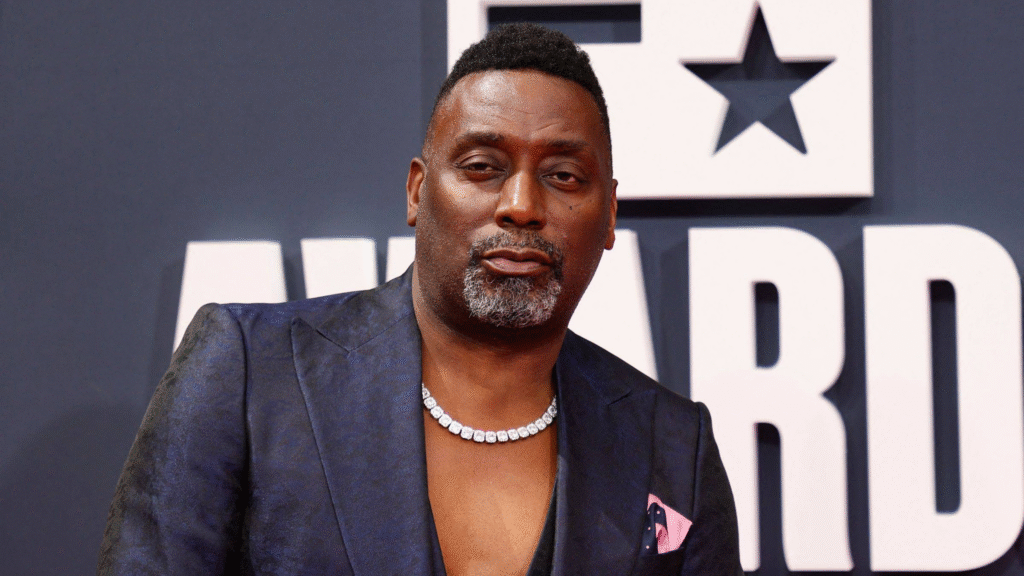
Our extensive conversation with the timeless Big Daddy Kane has offered an incredible journey through the core elements of his storied career, from the birth of his sound with the Juice Crew to the intricacies of his classic albums.
It’s clear that for Kane, the true measure of success isn’t awards or accolades, but the deeply personal connection his music forges with fans across their different life stages, echoing the sentiment: “I may die one day, but my rhymes will remain like a hieroglyphic.”
His reflections on collaborating with icons like Barry White and Quincy Jones underscore a profound commitment to artistry and continuous learning, an ethos he carries forward by championing modern lyricists like Lady London.
We are deeply grateful to Kane for sharing his nuanced perspective on the cultural shifts in hip-hop, the power of a performer’s persona, and the joy he finds in being remembered by his fans. This conversation serves as a powerful reminder that Big Daddy Kane’s influence remains an essential, living chapter in the history of music.