
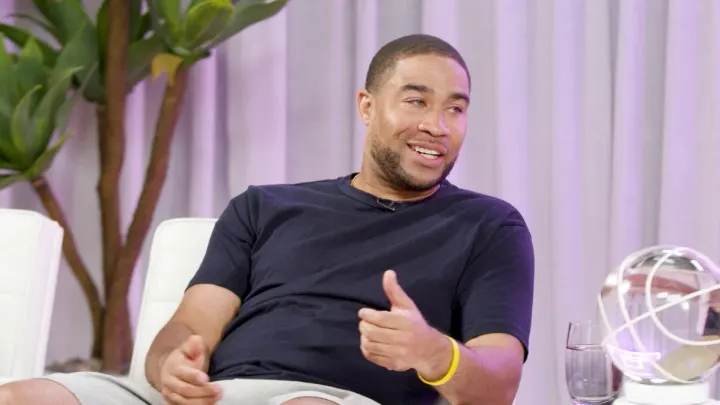
Andre Barrett, a New York City basketball legend and former NBA player, recently reflected on the city’s storied point guard tradition, the iconic figures who shaped his game, and the incredible, but ultimately short-lived, recruiting class at Seton Hall that was compared to Michigan’s “Fab Five.”
A Connection to Every NYC Point God
Barrett’s basketball education began at an early age, giving him a unique connection to almost every elite point guard who came before him. He described himself as a “historian” of the game, largely due to the relationships cultivated by his AAU coach.
“We go from Rod Strickland who was my middle school coach. I played for Rod’s AAU team at the time in middle school. Rod is the first NBA player that I first worked out with,” Barrett shared.
His relationship with Mark Jackson proved pivotal. While in the 10th grade, Jackson—who was participating in open runs with pros and college players—took notice of his talent. “Mark Jackson was the first player to come up to me and take a look at my skill set and my ability and literally told me that I had an opportunity to MAKE the NBA,” Barrett recalled, adding that the veteran gave him “precious jewels” to build on.
Other influences included watching legends like God Shammgod and Stephon Marbury. “I sat there as a kid and watched them. I watched Stephon come down and the cameras were on him and it was so cool to me at that age somebody is getting that type of attention and publicity on television,” he said. He specifically mentioned seeing Shammgod’s unique dribbling and the attention he commanded.
Barrett even looked up to players who are sometimes overlooked, like Kareem Reid. Seeing Reid and Felipe Lopezautograph his book at the [1994] McDonald’s All-American Game directly inspired his own journey, making him strive to become an All-American himself. The lineage stretches back further to Kenny Anderson and Kenny Smith, whose tournament in Lefrak City he played in as a 10-year-old.
“I had a connection to probably every single one of those guys—Rafer [Alston], every single one of them in some sense,” Barrett concluded. “That’s something that I strived for.”
Recreating the NYC Basketball Pizazz
When asked if New York City could ever recreate the dominance and excitement of the 1980s and 90s basketball scene, Barrett was optimistic. He believes it is a matter of mindset and foundation.
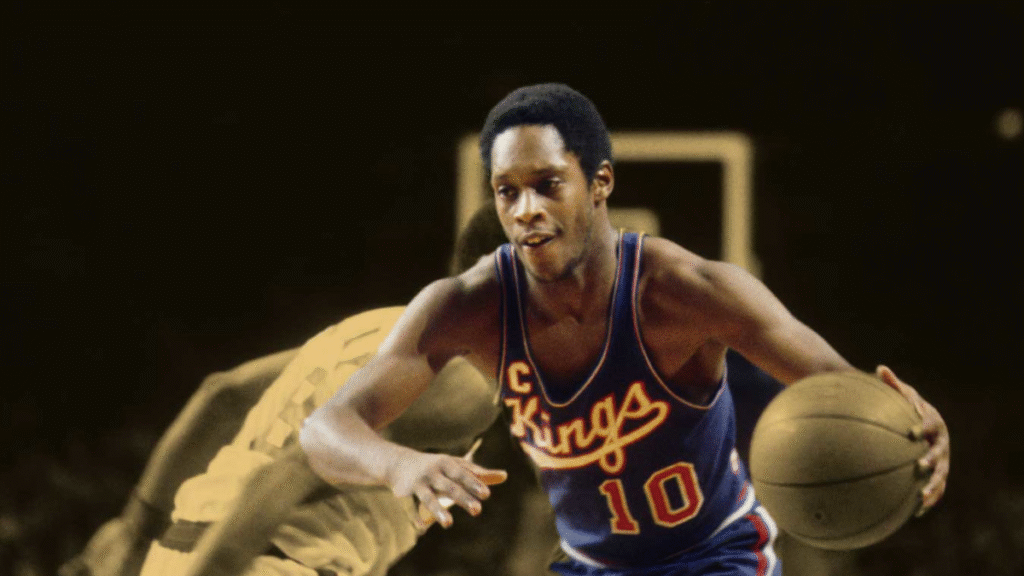
“I think we can. I mean, it’s just a matter of a mindset and just guys kind of creating their own lane,” he said. He noted that the legendary guards of his era, like Jackson and Smith, followed the lead of true pioneers like Tiny Archibald and Lenny Wilkens.
“It was somebody before them and they followed that lead and they put their own twist to it but it was something about the foundation of just being from New York that you took with you and you just added your own flavor to it,” he explained. Barrett believes it only takes one kid to start that ripple effect again.
The Seton Hall “Fab Five” That Was Destined for Greatness

In 2000, Barrett arrived at Seton Hall as part of one of the nation’s most heralded recruiting classes, alongside All-Americans Eddie Griffin and Marcus Toney-El. Barrett joked that Toney-El was the “car salesman” who helped bring the group together.
“I think me and Eddie had a real special bond… we kind of wanted to go to school together,” Barrett said. The buzz around the freshman class, which joined a core group coached by Tommy Amaker and assistant Freddie Hill, immediately created a sense of destiny, earning the local comparison to the famed Michigan “Fab Five.”
“I think we DEFINITELY did [have Fab Five vibes]. We just didn’t have the success that we wanted but I think that we brought awareness to the school,” Barrett stated.
The potential of that group, however, was truly staggering and almost historic. Barrett revealed that the class was nearly followed by a stream of future NBA talent. When Amaker left Seton Hall, he took assistant coach Freddie Hill to Villanova. Hill then recruited the same players to the Wildcats that he had been targeting for the Pirates.
“All those guys that went to Villanova: the Allen Rays, the Randy Foyes, the Mike Nardis, the Curtis Sumpters… all those guys that were at Villanova, they WERE coming to Seton Hall,” he confirmed.
The list of players who took visits or were on track to attend Seton Hall was a who’s who of future professionals: Ben Gordon, Charlie Villanueva, Luol Deng, and DeSagana Diop.
The thought of that colossal talent pool coalescing in South Orange is bittersweet. “People don’t understand how good we were going to be for the next couple of years. Seton Hall would’ve been special for years to come,” Barrett lamented, underscoring the tremendous impact the coaching change had on the program’s immediate future.