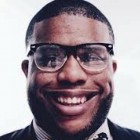

Dwight Howard’s Hall of Fame moment finally arrived yesterday. The eight-time All-Star, three-time Defensive Player of the Year, and centerpiece of the Orlando Magic’s 2009 Finals run was enshrined into the Naismith Memorial Basketball Hall of Fame, securing his place among the game’s immortals.
For a player whose career was as scrutinized as it was celebrated, Springfield represents validation. Howard’s prime was dominant in ways the numbers only begin to explain: five straight All-NBA First Team selections, eight All-NBA nods in total, eight All-Star appearances, over 19,000 career points, 14,000 rebounds, and three seasons leading the league in blocks. From 2008 to 2012, he was arguably the most impactful force in the league not named LeBron James.
As I watched Howard stand on that stage, my mind flashed back to a conversation I had with him in 2014. Even then, Dwight wasn’t shy about how he viewed the lineage of great centers—those who laid the foundation for him, and those who stood beside him in the big man brotherhood.
“So one day, me being up there—I’m gonna go with Shaq, Bill Russell, Kareem,” Howard told me when I asked about his Mount Rushmore.
He leaned into the point, insisting that the center position deserves its own monument:
“I’m picking all centers, they’re taking all of the big guys off the ballot. They can’t take centers off of Mount Rushmore. So this is my centers Mount Rushmore.”
Howard paused, reflecting on the enormity of names who have patrolled the paint. For him, even the idea of carving four heads into stone wasn’t enough. The depth at the position was too strong.
Howard smiled and offered a new vision.
“Howard believes that a Mount Rushmore isn’t even suitable for centers: ‘You have to have a Wall of Bigs,’ he said.”
On that wall, Dwight’s roll call was a who’s who of basketball royalty:
“You gotta have Dream [Hakeem Olajuwon], Wilt Chamberlain, Yao, Patrick Ewing.”
A Position Like No Other

That moment in 2014 stuck with me because it spoke to how Dwight saw himself and his place in history. He wasn’t just rattling off names. He was acknowledging a fraternity of players who defined eras, lifted franchises, and bent the game around their size and skill.
Bill Russell’s 11 rings in 13 seasons. Kareem Abdul-Jabbar’s skyhook and all-time scoring reign until LeBron passed him. Shaquille O’Neal’s bruising dominance that produced four championships. Hakeem Olajuwon’s footwork that left defenders spinning. Wilt Chamberlain’s statistical absurdity—100 points in a game, 50 points per season, rebounds by the truckload. Patrick Ewing’s New York grit and soft touch. Yao Ming’s global impact that expanded the NBA’s reach to China and beyond.
Each was different, but all were titans. And Dwight’s point was simple: a Mount Rushmore with four faces couldn’t contain the legacy of centers. You’d need a wall.
Dwight’s Own Place on the Wall

Howard might not have had the polished footwork of Olajuwon or the offensive arsenal of Kareem, but he owned his era through athleticism, rebounding, and rim protection. He was the defensive backbone of an Orlando Magic team that shocked LeBron James’ Cavaliers in 2009 en route to the Finals. In that postseason, he outdueled the likes of Kevin Garnett (injured that year but his Celtics were still a test) and took Orlando to heights the franchise hadn’t seen since Shaq.
From 2008 to 2012, Howard’s grip on the Defensive Player of the Year trophy was unmatched. He won three straight, something only Ben Wallace and Dikembe Mutombo had done. He wasn’t just blocking shots—he was erasing offensive game plans. Opponents funneled drives to the rim, only to see Dwight lurking, arms wide, ready to send the ball into the stands.
And while he was criticized for lacking a go-to post move, Howard still averaged over 20 points in four separate seasons. He punished teams with lobs, dunks, and relentless put-backs. His game might not have been pretty, but it was punishing.
The Hall of Fame Seal

Now, a decade after that 2014 conversation, Dwight’s “one day” is here. He joins the fraternity he so clearly respected. Springfield is more than a plaque and a bust—it’s acknowledgment that he belongs with the same players he once placed on his Wall of Bigs.
Critics often debated Howard’s personality or the way his career unfolded—his departure from Orlando, his short stints in Los Angeles, Houston, Atlanta, and beyond. But the full picture matters: Dwight was the best center in basketball for nearly a decade, and even in the twilight of his career, he contributed to a championship with the Lakers in 2020.
Full Circle

Hearing Dwight’s words again today carries a different weight. Back then, he was still writing his story. Now, the book has been closed and honored in Springfield.
“So one day, me being up there…” he told me in 2014. Yesterday, that day arrived.
The Wall of Bigs he imagined isn’t official, but in the minds of basketball fans, it lives on. And Dwight Howard, without question, has earned his place on it.